%20(3).png)


![TFD [LOGO] (10).png](https://static.wixstatic.com/media/bea252_c1775b2fb69c4411abe5f0d27e15b130~mv2.png/v1/crop/x_150,y_143,w_1221,h_1193/fill/w_179,h_176,al_c,q_85,usm_0.66_1.00_0.01,enc_avif,quality_auto/TFD%20%5BLOGO%5D%20(10).png)
COVID-19 PUTS WORKERS AT WORLD’S BIGGEST GOLD MINE IN THE PITS
- By The Financial District

- Oct 12, 2020
- 2 min read
Miners at Indonesia’s giant Grasberg gold and copper mine are demanding to work despite the pandemic and the lockdown that led to a blockade by workers in August 2020 until the operator, a subsidiary of the US miner Freeport McMoRan, relented and resumed weekly rotations at the site, 14,000 ft above sea level in Papua.
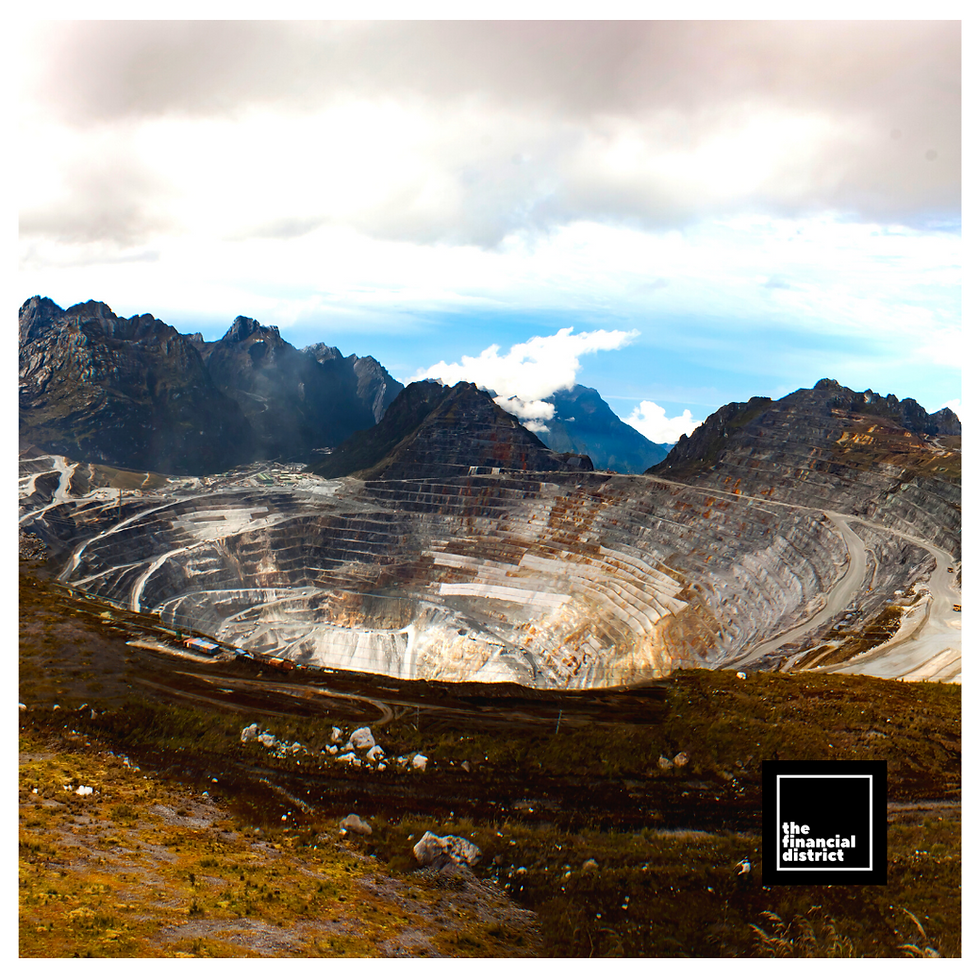

Now the workers are happier, but health experts fear the greater risk of a new outbreak, wrote Fathin Ungku and Ernest Scheyder for Reuters. The tensions expose the balancing act to maintain output at full blast, while containing COVID-19 in mines like Grasberg, the world’s largest gold mine and second-largest copper mine. “We’ve put the priority and the health of our workers and community at the top of our list,” Freeport McMoRan Chief Executive Richard Adkerson told Reuters. From the outset, we recognized that (Grasberg) was a particularly vulnerable place due to the size of the workforce” of nearly 30,000 people. Freeport is one of Indonesia’s biggest taxpayers, with direct contributions of more than $16 billion in taxes, royalties, dividends and other payments between 1992 and 2015, according to company data. The mine is also crucial for Freeport McMoRan, the world’s largest publicly traded copper producer, which made a profit in the second quarter partly due to higher production at Grasberg. Operations at the Indonesian mine are expected to ramp up even further as it transitions from open pit to underground mining.
Since the protests, workers have returned to a weekly crew-change roster, the local company PT Freeport Indonesia said, with about 400-500 workers leaving and entering the mine daily after temperatures checks and a rapid COVID-19 test. If a rapid test is positive, this would be followed up by a Polymerase Chain Reaction (PCR) test, which experts consider far more accurate. Before the pandemic, twice as many workers would enter and leave the mine daily, Freeport Indonesia said.
Adkerson said Freeport is treating its employees for coronavirus free of charge at its own medical facilities. Tri Yunis Miko Wahyono, an epidemiologist at the University of Indonesia, said crew changes should be less frequent to limit the risk of spreading the virus. “The shortest crew change should be two weeks unless a company is willing to pay for PCR tests for every worker every week,” he said. But that strategy keeps workers on site longer, adding to potential friction with the company. To help resolve the protests, Freeport Indonesia paid workers compensation of up to 15 million rupiah ($1,010) for working longer than usual, although it said it did not have responsibility for contractors, who make up nearly three quarters of the 29,201 workers.