%20(3).png)


![TFD [LOGO] (10).png](https://static.wixstatic.com/media/bea252_c1775b2fb69c4411abe5f0d27e15b130~mv2.png/v1/crop/x_150,y_143,w_1221,h_1193/fill/w_179,h_176,al_c,q_85,usm_0.66_1.00_0.01,enc_avif,quality_auto/TFD%20%5BLOGO%5D%20(10).png)
EX-U.S. COURT OF APPEALS JUSTICE SAYS TRUMP CAN’T PARDON HIMSELF
- By The Financial District

- Dec 12, 2020
- 2 min read
Former US Court of Appeals Justice J. Michael Luttig has argued that President Donald Trump cannot pardon himself, saying Trump’s declaration that he has “the absolute right to pardon himself” based on the views of some legal scholars is wrong. The president has no right under the Constitution to pardon himself, Luttig maintains.
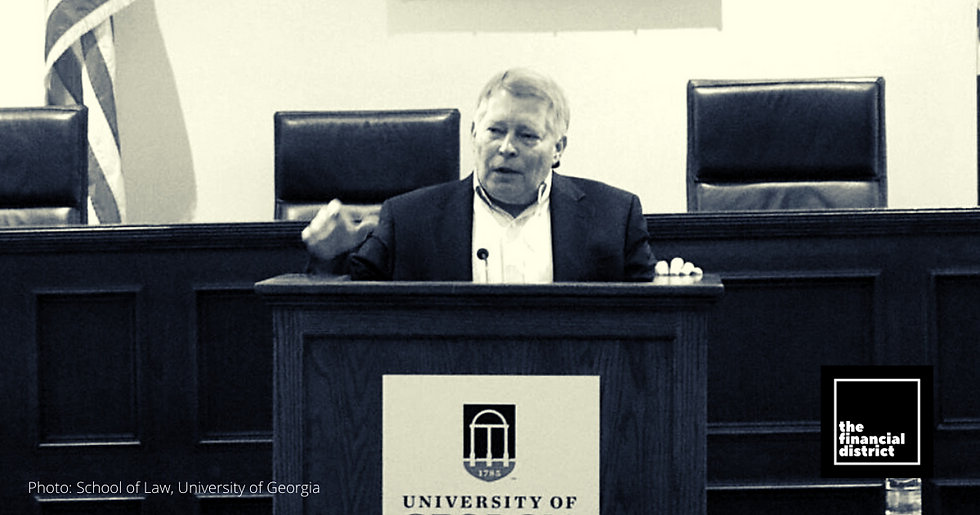

In an opinion piece for the Washington Post, Luttig noted that pardon clause is Article II, Section 2, Clause 1 of the Constitution, which provides that the president “shall have Power to grant Reprieves and Pardons for Offenses against the United States, except in Cases of Impeachment.”
“There is next to nothing from the Constitutional Convention, state ratification debates or 229 years of Supreme Court decisions that sheds light on whether this language empowers a president to pardon himself for federal crimes,” he added. “The argument often made for the presidential self-pardon is that the authority is absolute, and that the pardon clause does not expressly prevent self-pardons. The argument often made against self-pardons is that they would be inconsistent with the president’s responsibility in Article II, Section 3 to “take Care that the Laws be faithfully executed,” Luttig noted.
“So why is it clear that the president lacks the power to pardon himself? There are three reasons. The language of the pardon power itself is ambiguous in the face of a constitutional expectation of clarity if the Framers intended to invest the president with such extraordinary power — a power in the sovereign that was little known to the Framers, if known at all. Second, the Framers clearly contemplated in the impeachment provisions of the Constitution that the president would not be able to violate the criminal laws with impunity.
There, without so much as a hint of a president’s power to avoid criminal liability through self-pardon, they provided that even ‘in Cases of Impeachment,’ for which the president can only be removed and disqualified from holding high federal office, ’the party convicted shall nevertheless be liable and subject to Indictment, Trial, Judgment and Punishment, according to Law.’ And last, but not least, a power in the president to pardon himself for any and all crimes against the United States he committed would grievously offend the animating constitutional principle that no man, not even the president, is above and beyond the law,” the justice concluded.


