%20(3).png)


![TFD [LOGO] (10).png](https://static.wixstatic.com/media/bea252_c1775b2fb69c4411abe5f0d27e15b130~mv2.png/v1/crop/x_150,y_143,w_1221,h_1193/fill/w_179,h_176,al_c,q_85,usm_0.66_1.00_0.01,enc_avif,quality_auto/TFD%20%5BLOGO%5D%20(10).png)
Hamas Isn’t Done Fighting Despite a Truce with Israel
- By The Financial District

- Oct 22, 2025
- 2 min read
The first phase of the U.S.-brokered cease-fire agreement between Israel and Hamas is a major achievement, securing the release of captives held by Hamas for over two years and ending a devastating war in Gaza under a 20-point plan, Matthew Levitt of the Reinhard Program on Counterterrorism and Intelligence at the Washington Institute for Near East Policy reported for Foreign Affairs.
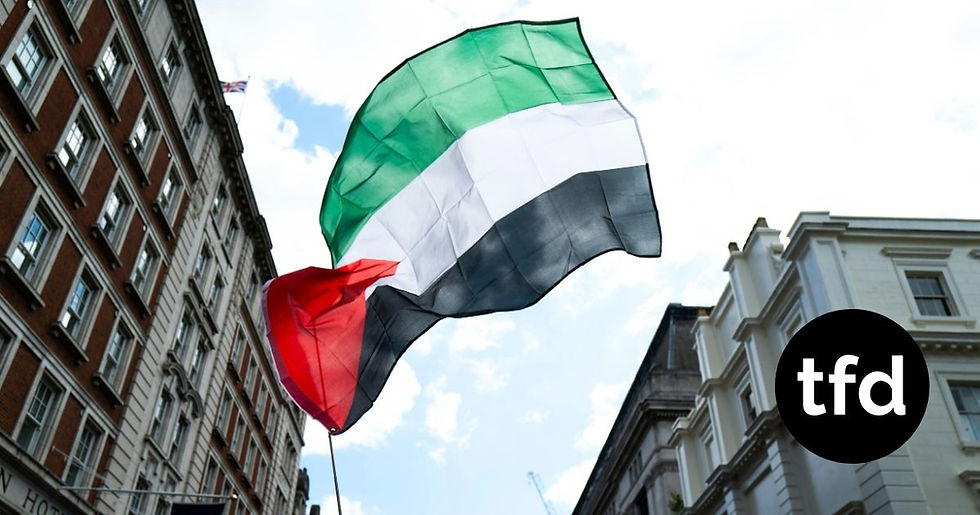


But the second phase of the plan will confront a set of thorny issues, including the disarmament of Hamas and the future of Palestinian governance.
If past is precedent, Hamas will fight tooth and nail to preserve its political and military standing in Gaza and its commitment to violently oppose prospects for peace.
But the second phase of the plan will confront a set of thorny issues, including the disarmament of Hamas and the future of Palestinian governance.
If past is precedent, Hamas will fight tooth and nail to preserve its political and military standing in Gaza and its commitment to violently oppose prospects for peace.
This is not the first time Hamas has had its back to the wall and been forced to engage in a strategic reassessment—finding a way to navigate international pressure while preserving its commitment to using violence to undermine its Palestinian rivals and, ultimately, destroy Israel.

Thirty-one years ago, Hamas found itself in a similar position in the wake of the Oslo Accords, which began the long “peace process” between Israel and the Palestine Liberation Organization (PLO).
Then, as now, Hamas faced the prospect of an Israeli withdrawal from Palestinian territories and a Palestinian governance structure that excluded the group and was committed to its disarmament.
The decisions it made at the time offer a preview of how it is likely to operate in the weeks and months to come.

As it did in the 1990s, Hamas will likely nod in agreement to various cease-fire requirements while continuing to function as a political actor in Gaza.
It will recruit new leaders and fighters from recently released prisoners and Gazans frustrated by the slow pace of aid and reconstruction, rearm its cadres with weapons smuggled by Iran or manufactured at home, and refill its coffers by co-opting humanitarian aid or resources intended for rebuilding.
Put simply, Hamas may play along with the first phase of the cease-fire—but the group is not done fighting.