%20(3).png)


![TFD [LOGO] (10).png](https://static.wixstatic.com/media/bea252_c1775b2fb69c4411abe5f0d27e15b130~mv2.png/v1/crop/x_150,y_143,w_1221,h_1193/fill/w_179,h_176,al_c,q_85,usm_0.66_1.00_0.01,enc_avif,quality_auto/TFD%20%5BLOGO%5D%20(10).png)
LAOS LOSES CONTROL OF POWER GRID TO CHINA DUE TO DEBT
- By The Financial District

- Sep 21, 2020
- 2 min read
The $6 billion China-Laos high-speed railway is on track for completion in just over a year, with the first train scheduled to arrive in the capital Vientiane on Lao national day, December 2, 2021, which commemorates the Communist takeover in 1975, and the economic and social progress achieved under the Lao People’s Revolutionary Party. However, the day may as well herald the poor country’s loss of sovereignty to its giant neighbor to the north, Bertil Lintner wrote for the weekly Asia Times.
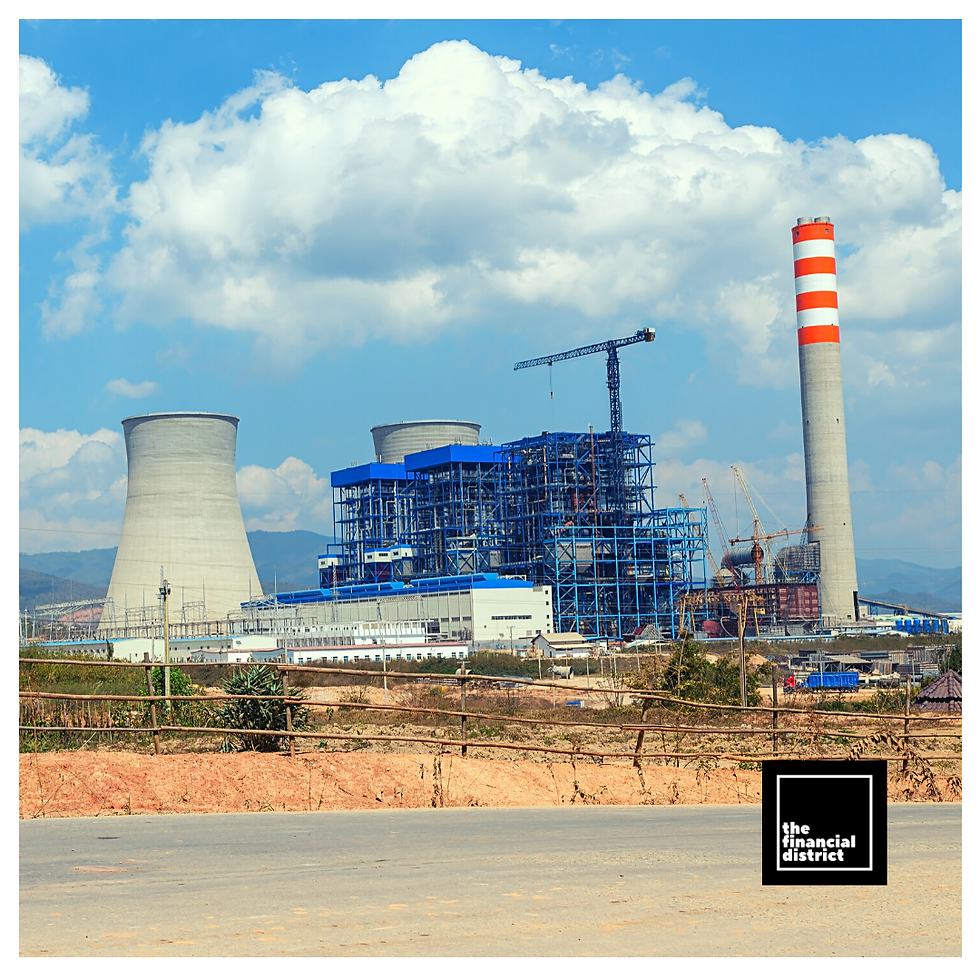

Laos is the latest nation to fall victim to a Belt and Road Initiative (BRI) debt trap, whereby nations are pressed into making sovereignty-eroding concessions after defaulting on their infrastructure-related debts owed to Beijing. Laos’ foreign exchange reserves have fallen below $1 billion, less than the country’s annual owed debt payments, putting the country on the verge of a sovereign default. News reports suggest that the Lao Finance Ministry has asked China, its biggest foreign creditor, to restructure its debts to avoid defaulting.
Last month, Moody’s rating agency downgraded Laos to junk territory, from B3 to Caa2, and changed its outlook on the country from neutral to negative due to “severe liquidity stress.” Laos has borrowed heavily to invest in several Mekong River hydropower projects as well as the $6 billion high-speed rail project, a key link in China’s BRI design to connect its southern province of Yunnan with mainland Southeast Asia.
Around 60% of the train’s cost is financed through an Export-Import Bank of China loan. The remaining 40% comes from a joint venture company comprised of three Chinese state-owned firms, which hold 70% of the remaining stake while a Lao state-owned enterprise has the remaining 30%. The Lao government has allocated $250 million from the national budget and taken out a further $480 million loan from the Export-Import Bank of China to finance its share of the venture. Those financial obligations, however, have apparently become untenable for the Lao government as it moves to sell state assets to stay afloat. On September 4, Reuters reported that Vientiane is set to cede majority control of the national electric power grid to China Southern Power Grid Co., a state-owned enterprise headquartered in Guangzhou.
The Financial District would like to learn more from its audience. Can you please give us feedback on this article you just read. Click Here to participate in our online survey.


