%20(3).png)


![TFD [LOGO] (10).png](https://static.wixstatic.com/media/bea252_c1775b2fb69c4411abe5f0d27e15b130~mv2.png/v1/crop/x_150,y_143,w_1221,h_1193/fill/w_179,h_176,al_c,q_85,usm_0.66_1.00_0.01,enc_avif,quality_auto/TFD%20%5BLOGO%5D%20(10).png)
Oil Reserves Dwindle as Saudi Aramco Chief Warns Supply Cushion Is “Scarily Thin”

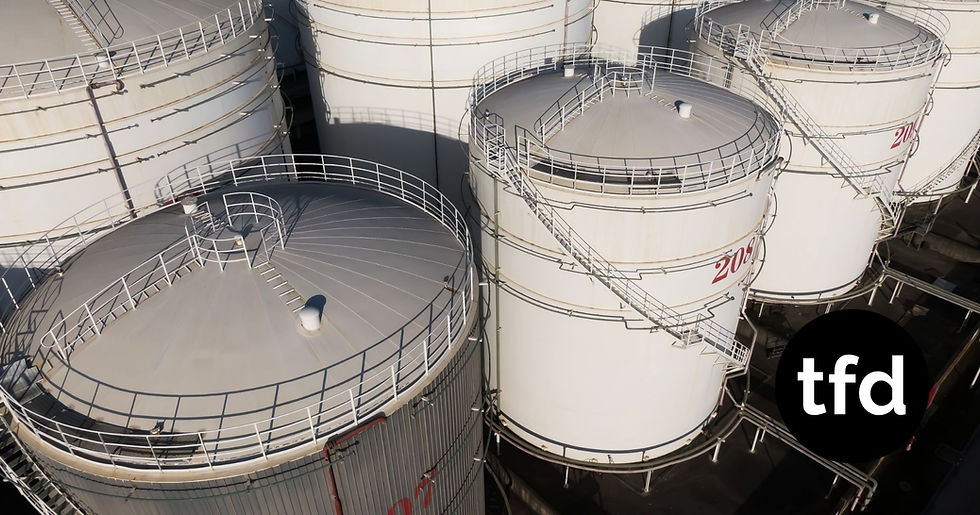
Global oil inventories are dwindling as supply disruptions and recovering demand raise concerns about the world's ability to withstand further shocks to energy markets.


A deadly attack on a tanker in the Persian Gulf pushed oil prices higher, adding to concerns about shipping security and the availability of crude and refined fuels.
Saudi Aramco Chief Executive Amin Nasser warned that the global energy system's supply-resilience cushion was “scarily thin,” citing substantial losses in supply and declining inventories.
Nasser said the world entered the crisis with nearly 10 billion barrels in global oil stocks.

Since then, almost 3 billion barrels of gross oil supply had been lost, while more than 1 billion barrels had been drawn from inventories to help offset the disruption.
He said estimates indicated that less than 6 billion barrels of commercial inventories remained, with much of that supply not readily available.
The warning comes as energy markets remain sensitive to developments in the Middle East and changes in demand, including signs of a recovery in Chinese consumption.

Continued disruption could raise fuel costs, intensify inflationary pressure and weigh on economic growth.
Separately, American Express National Bank was fined $350 million by the U.S. Office of the Comptroller of the Currency for deficiencies in its anti-money-laundering compliance program.
Regulators cited weaknesses in staffing, internal controls, training and risk assessments.

They said the bank had failed to adequately identify, evaluate and report suspicious activity involving approximately $13 billion over a decade.
The U.S. government also moved to suspend Microsoft and several other technology and consulting companies from sponsoring certain employment-based permanent-residency applications.
The administration said the action was connected to an investigation into alleged misuse of worker-visa programs.

The companies affected include Infosys, Cognizant, Tata-related businesses, HCL, Wipro and Adobe.
The suspension could complicate the immigration process for some foreign professionals and employers. Its longer-term impact on technology hiring and staffing remains uncertain.


