%20(3).png)


![TFD [LOGO] (10).png](https://static.wixstatic.com/media/bea252_c1775b2fb69c4411abe5f0d27e15b130~mv2.png/v1/crop/x_150,y_143,w_1221,h_1193/fill/w_179,h_176,al_c,q_85,usm_0.66_1.00_0.01,enc_avif,quality_auto/TFD%20%5BLOGO%5D%20(10).png)
OIL TURMOIL TO SPUR INFLATION, IMPACT ON RECOVERY
- By The Financial District

- Jul 8, 2021
- 2 min read
OPEC+ brinkmanship has taken oil prices towards $80 a barrel, the highest since 2018, threatening to upend central banks' transitory inflation narrative, as well as the post-pandemic economic recovery, Karin Strohecker, Dhara Ranasinghe and Saikat Chatterjee reported for Reuters.
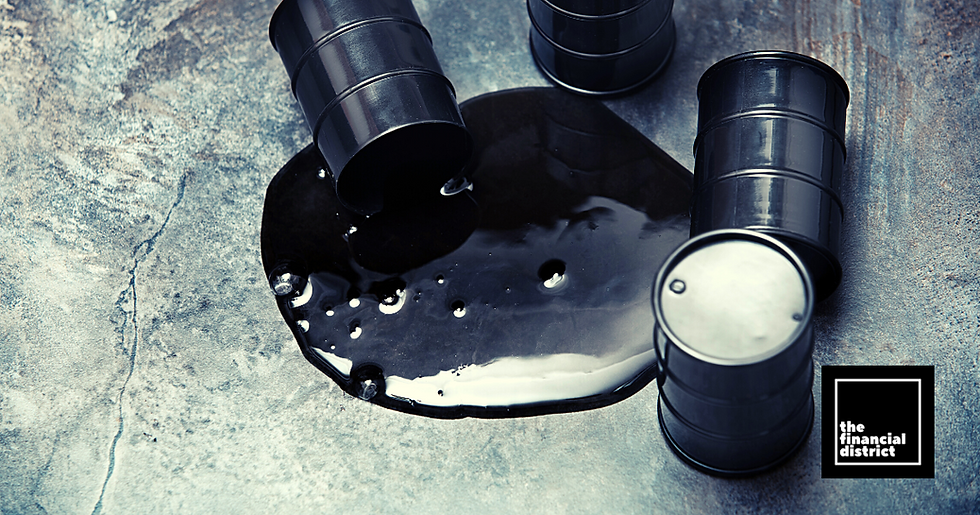

Last year's Saudi-Russian oil war showed that disputes between OPEC+ members do not always result in higher prices, but this week's standoff within the group sent prices higher, building on year-to-date gains of around 50%. Many traders do not discount a return to $100 a barrel, levels last seen in 2014.
Brent futures slipped around 3% on Tuesday but if prices persist at these levels or move higher, inflation could well prove more sustained than anticipated. That will up the ante on central banks to unwind super-easy monetary policy.

The year-on-year oil price percentage change is at levels last seen more than 40 years ago. Prices - currently around $75 per barrel for Brent crude futures - are only half of where they were in 2008. But markets have a habit of running scared of rapid moves, said Christian Keller at Barclays.
Investors, central bankers, and policymakers have been debating whether the recent inflation pickup is transitory or the real deal. Citi's inflation surprise index has hit record highs for the United States and multi-year peaks in many other places, indicating inflation readings have come in higher than expected.
Around 80% of emerging market economies by gross domestic product (GDP) are oil importers. Many are more sensitive to price pressures as food and energy make up a higher proportion of their inflation baskets. A number of them - such as Russia or Brazil - have already been forced into raising interest rates.

An extended rise in oil prices would be negative for emerging market currencies which hit a record high last month. Currencies of importing nations such as India and Turkey would likely be the hardest hit, though oil-exporting Russia's rouble would be in for gains. US headline inflation is at 5% while in the euro area it is hovering at the European Central Bank's target of close to but below 2%.
Those might not be red flags, but this comes at a time when many fear that economic expansion - especially in the United States and China - has reached its zenith. Even in Europe, where growth is still accelerating, the impact of rising crude prices would be felt, potentially dampening consumer spending - a key plank in the bloc's economic recovery.


