%20(3).png)


![TFD [LOGO] (10).png](https://static.wixstatic.com/media/bea252_c1775b2fb69c4411abe5f0d27e15b130~mv2.png/v1/crop/x_150,y_143,w_1221,h_1193/fill/w_179,h_176,al_c,q_85,usm_0.66_1.00_0.01,enc_avif,quality_auto/TFD%20%5BLOGO%5D%20(10).png)
PART I: A Decade After UNCLOS, the Next Battle Is for Philippine Self-Agency
- By Gerry Urbina

- Jul 13
- 5 min read
Updated: Jul 16
Ten years ago today, the Philippines secured one of the most consequential legal victories in modern international law.


On July 12, 2016, the Permanent Court of Arbitration in The Hague overwhelmingly upheld Manila's rights under the United Nations Convention on the Law of the Sea (UNCLOS), invalidating China's sweeping "nine-dash line" claim and reaffirming the rules-based international order in the West Philippine Sea.
A decade later, however, the country's greatest strategic challenge extends far beyond the waters surrounding its western seaboard.
The contest now unfolding is no longer defined solely by coast guard encounters, naval patrols, or diplomatic protests. It is increasingly a contest over ideas, institutions, information, economic resilience, and, above all, the Philippines' ability to determine its own future.
At a time when Beijing continues to reject the arbitral ruling while simultaneously advancing new legal and historical narratives—including recent assertions by Chinese academics seeking to cast doubt on Philippine sovereignty over Batanes—the central question confronting the country is no longer simply how it protects its territory.

It is whether Filipinos can continue making strategic decisions based on their own national interests.
That question formed the intellectual centerpiece of a recent Monday Circle forum held at the Westin Manila, where Professor Joshua Espena offered a perspective that challenged one of the most common assumptions surrounding the West Philippine Sea.
![Strategic thinker. Educator. Wargaming practitioner. Professor Joshua Espena challenges Filipinos to look beyond geopolitics and cultivate a strategic culture grounded in independent thinking, informed decision-making, and the enduring primacy of the national interest. [Photo: PUP]](https://static.wixstatic.com/media/1c4fd3_703667b5c41147eba9dc7b0573b903a6~mv2.png/v1/fill/w_980,h_980,al_c,q_90,usm_0.66_1.00_0.01,enc_avif,quality_auto/1c4fd3_703667b5c41147eba9dc7b0573b903a6~mv2.png)
Rather than viewing the issue through the familiar prism of choosing between the United States and China, Espena argued that such a binary framing fundamentally misunderstands what is at stake.
"The better question is not whose side are we on, but what choices should we take?" he remarked.
It is a deceptively simple observation, yet one that carries profound implications.

Self-Agency
In diplomacy, self-agency refers to a nation's capacity to act independently according to its own interests, values, and long-term objectives rather than becoming captive to the agendas of larger powers.
For middle powers like the Philippines, self-agency does not require strategic isolation or neutrality.
Instead, it requires the confidence and institutional maturity to engage allies, deter adversaries, and pursue partnerships without surrendering sovereign decision-making.
This distinction is particularly relevant as the Indo-Pacific enters an increasingly multipolar era.

Strategic competition between major powers will continue to shape regional dynamics, but Espena cautioned against reducing Philippine foreign policy to a simplistic contest between competing blocs.
The country's alliances and partnerships remain important, yet they should ultimately serve Philippine interests rather than define them. As he succinctly observed during the forum, "The most constant thing should be the Filipino interest."

Strategic Culture
Underlying this philosophy is a broader concept that Espena described as strategic culture. Unlike military capability, strategic culture cannot be acquired overnight through new equipment or larger defense budgets.
It is cultivated over time through education, public discourse, institutional memory, responsible governance, and a society that learns to think critically about uncertainty.
National security, in this sense, begins long before the deployment of soldiers or ships. It begins with how citizens, policymakers, businesses, universities, and the media understand the world around them.
That perspective arrives at an especially significant moment for the Armed Forces of the Philippines. Later this month, General Romeo Brawner Jr. is scheduled to conclude his historic three-year term as Chief of Staff, becoming the first AFP leader to complete the fixed tenure established under Republic Act No. 11939.

His retirement marks more than a routine leadership transition. It serves as a reminder that while commanders inevitably change, enduring strategic institutions and a coherent national security culture must continue to evolve.
Leadership continuity matters, but the country's long-term resilience ultimately depends on a society capable of sustaining sound strategic thinking beyond any single administration or military chief.
Wargaming
Espena also challenged participants to rethink one of the most misunderstood concepts in national security: wargaming.
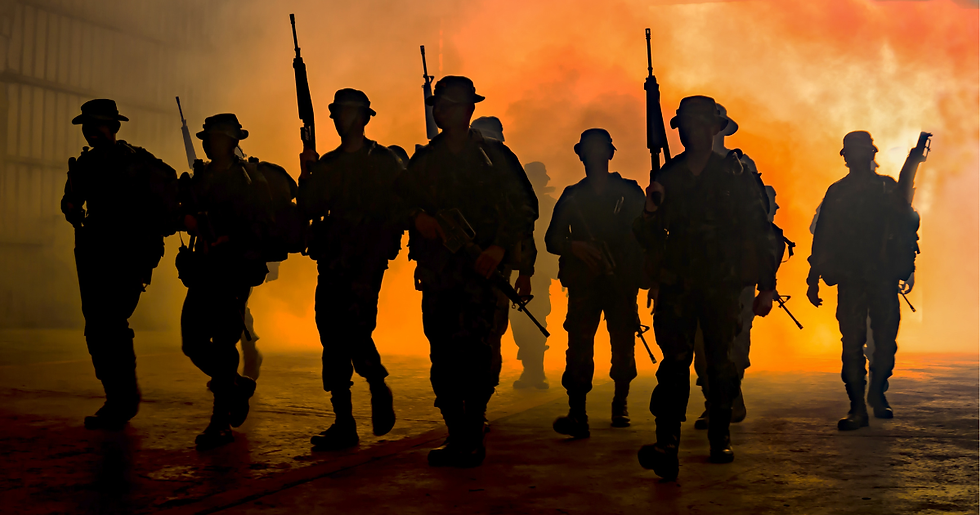
Within the Armed Forces of the Philippines, wargaming has traditionally focused on maritime and littoral operations, allowing commanders to simulate potential contingencies in the West Philippine Sea and other contested areas before real-world decisions must be made.
Yet Espena argued that its value should not remain confined to military headquarters.
Businesses, universities, media organizations, government agencies, and civil society all operate in environments shaped by uncertainty. Like military planners, they must routinely make consequential decisions with incomplete information.
Wargaming offers a disciplined methodology for testing assumptions, exploring alternative futures, and exposing vulnerabilities before crises emerge.

As Espena explained, its purpose is not to predict the future with certainty, but to prepare decision-makers to make better choices when uncertainty inevitably arrives.
In an era of geopolitical competition, rapidly evolving technologies, and gray-zone coercion, that capacity for disciplined strategic thinking becomes an essential national asset.
His caution against intellectual complacency resonates beyond traditional security circles. Strategic surprises, he noted, are normal. The assumptions that appear most reasonable today may quickly become obsolete tomorrow.

Policymakers, business leaders, journalists, and citizens alike therefore share a responsibility to continually reassess the mental models that shape their decisions.
The challenge is not merely obtaining accurate information but ensuring that decisions remain grounded in a realistic understanding of an increasingly fluid strategic environment.
Independent Judgement
This broader understanding also helps explain why developments such as China's recent academic claims over Batanes deserve close attention.
While dismissed by Philippine officials as baseless, such narratives illustrate how geopolitical competition increasingly unfolds through legal arguments, historical revisionism, and information campaigns that seek to influence perceptions long before any physical confrontation occurs.

They reinforce Espena's observation that the West Philippine Sea represents only the visible portion of a much larger strategic landscape, or what he describes the tip of the iceberg.
As the Philippines commemorates a decade since its landmark arbitral victory, the country's greatest strength will not be measured solely by its ships, aircraft, or alliances. Those remain indispensable pillars of national defense.
Equally important, however, is the nation's ability to think independently, adapt intelligently, and remain steadfast in pursuing its own interests amid intensifying global competition.
The enduring legacy of the 2016 ruling therefore lies not only in affirming the Philippines' maritime rights under international law. It also reminds Filipinos that sovereignty is ultimately exercised through independent judgment.

Preserving that judgment requires more than military preparedness. It demands a strategic culture embraced across government, business, academia, the media, and civil society alike.
In the decade ahead, defending the West Philippine Sea will continue to require capable armed forces. But securing the country's future will depend just as much on a nation confident enough to chart its own course.
--
Next: Part II examines how Foreign Information Manipulation and Interference (FIMI) has emerged as one of the defining national security challenges of the digital age, and why the battle for Philippine sovereignty increasingly begins not at sea, but in the contest for public perception.
--
ABOUT AUTHOR