%20(3).png)


![TFD [LOGO] (10).png](https://static.wixstatic.com/media/bea252_c1775b2fb69c4411abe5f0d27e15b130~mv2.png/v1/crop/x_150,y_143,w_1221,h_1193/fill/w_179,h_176,al_c,q_85,usm_0.66_1.00_0.01,enc_avif,quality_auto/TFD%20%5BLOGO%5D%20(10).png)
The Hidden Cost of Inflation Is Anchored at Our Ports
- By Gerry Urbina

- Jun 17
- 6 min read
Updated: Jun 22
Inflation is often blamed on forces beyond our control. The war in the Middle East pushes up oil prices. Poor weather disrupts harvests. Global supply chains seize up.
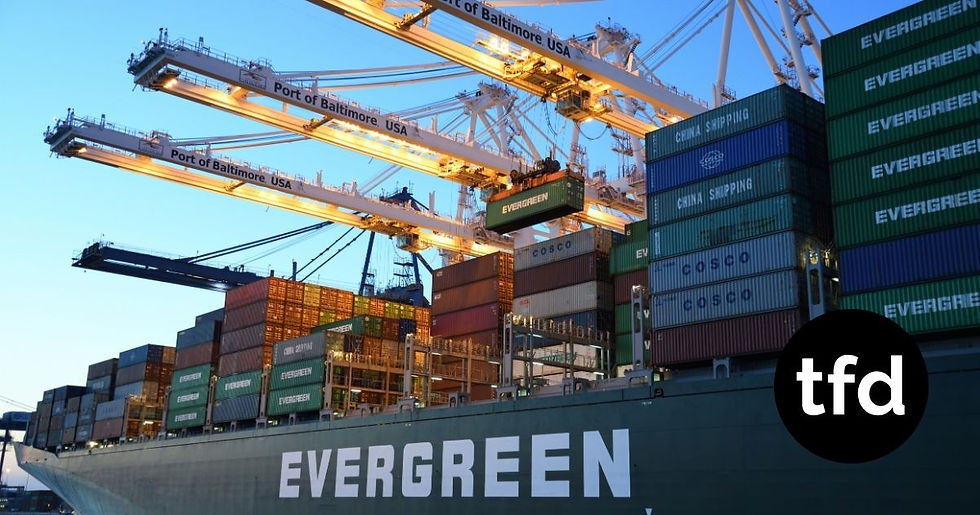
![INFLATION STARTS AT THE DOCK. Every unnecessary peso charged to a vessel adds pressure to prices throughout the supply chain. [Illustrator: ASK]](https://static.wixstatic.com/media/1c4fd3_35faf258d5eb47e3a12c344aa009ee4e~mv2.png/v1/fill/w_980,h_515,al_c,q_90,usm_0.66_1.00_0.01,enc_avif,quality_auto/1c4fd3_35faf258d5eb47e3a12c344aa009ee4e~mv2.png)


Yet some of the most persistent drivers of rising costs are not found in distant capitals or international commodity markets. They are actually embedded in domestic systems that quietly add friction, delay, and expense to the movement of goods.
One such system recently took center stage at The Monday Circle, where leaders of the Philippine Ship Agents Association (PSAA) and the Philippine Interisland Shipping Association (PISA) laid out a case for reforming the country's harbor pilotage framework.
Their argument was straightforward. Pilotage remains an essential safety function, but the manner in which it is organized and regulated in the Philippines may no longer be aligned with the demands of a modern economy.

Port Issue
No doubt, harbor pilots play a critical role in maritime safety. These highly trained maritime professionals guide vessels through congested waterways and into port berths using their knowledge of local conditions, currents, tides, and navigational hazards. Few in the industry dispute the necessity of pilotage itself.
However, the controversy centers not on pilotage as a safety measure, but on the structure through which pilotage services are provided.
Industry groups point to dated Executive Order 1088, issued in 1986, which established the framework governing pilotage services.

According to shipping stakeholders, the current arrangement has evolved into an exclusive system that limits competition, weakens accountability, and contributes to rising logistics costs.
Their concern is not merely about the expenses borne by shipping companies. It is about how those costs ripple through the broader economy.
Industry representatives also point to what they describe as a growing proliferation of non-standardized charges imposed outside clearly understood tariff schedules.

These allegedly include fees associated with vessel overhangs, draft conditions, weather circumstances, and other operational considerations such as weekend overtime.
Whether these practices are widespread or justified remains a matter for regulators to determine.
What concerns shipping operators is that many of these charges are difficult to anticipate, challenge, or independently verify.

Worsening Inflation
What is worse, every additional charge imposed on a vessel eventually finds its way into the price of goods.
Imported food, construction materials, fuel products, consumer merchandise, and even domestically transported cargo all absorb logistics expenses before reaching store shelves.
In sum, every peso added to the cost of moving goods eventually lands on a consumer's receipt.
In a country already grappling with inflation rates that remain elevated compared with many of its Southeast Asian neighbors, every inefficiency matters.

UPLIFT as Remedy
This is where the debate intersects directly with the Marcos administration's UPLIFT initiative.
Established through Executive Order No. 110, UPLIFT was designed as a whole-of-government response to inflation, energy shocks, and supply chain disruptions.
While much of the public discussion has focused on fuel subsidies, food security programs, and transport assistance, the initiative also seeks to eliminate bottlenecks that raise the cost of moving goods throughout the country.
Viewed through that lens, pilotage reform becomes more than an industry concern. It becomes an inflation-control measure.

This was precisely the point raised by several members of The Monday Circle, particularly veteran columnist Lito Gagni.
Rather than presenting pilotage reform solely as a shipping industry grievance, they argued that stakeholders should frame the issue within the broader national effort to curb inflation, strengthen food security, improve logistics efficiency, and enhance the country's competitiveness.
In that context, harbor pilotage ceases to be a niche maritime concern and becomes a matter of national economic policy.
Several participants likewise suggested that shipping groups should not limit their efforts to legislative advocacy alone.

Congressman Franz Pumaren's proposed Open Pilotage measure deserves serious consideration. However, executive action may offer a more expedient, parallel pathway.
If pilotage reform can be positioned as a logistics modernization initiative under the broader objectives of UPLIFT, the issue could gain urgency within the administration's anti-inflation agenda while legislative deliberations continue.
![A TEST FOR UPLIFT. Reducing logistics costs may prove just as important as managing fuel and food prices for the Marcos administration. [Photo: PCO]](https://static.wixstatic.com/media/1c4fd3_0ecb879a822c4ee5a7848ab0ed3f1636~mv2.png/v1/fill/w_980,h_515,al_c,q_90,usm_0.66_1.00_0.01,enc_avif,quality_auto/1c4fd3_0ecb879a822c4ee5a7848ab0ed3f1636~mv2.png)
Other Maritime Models
The international experience also provides us valuable lessons for future policy formulation.
Singapore, one of the world's leading maritime hubs, requires pilotage for vessels entering many of its ports. Yet pilotage fees are subject to transparent regulatory oversight.
The authority responsible for maritime governance sets the rules and pricing structures rather than leaving these matters entirely to service providers.

Beyond competition and transparent rate-setting, many advanced maritime jurisdictions have adopted risk-based pilotage systems.
Norway, Finland, Germany, Sweden, Japan, Singapore, and Hong Kong employ pilotage exemption certificate programs that allow experienced masters who regularly navigate the same waters to qualify for exemptions under strict competency requirements.
These systems recognize that safety need not be compromised by flexibility. Rather, they seek to match regulatory requirements to actual operational risk.

PISA Position
The Philippine Interisland Shipping Association (PISA) has long advocated for a review of compulsory pilotage requirements in the domestic trade.
The association argues that licensed domestic masters who routinely call at the same ports accumulate extensive local knowledge through repeated voyages and should be considered for carefully regulated self-pilotage arrangements or pilotage exemption programs.
Such proposals would not eliminate pilotage. Instead, they would align Philippine practice more closely with international models already adopted in many maritime nations.

The distinction is significant. In many jurisdictions, compulsory pilotage is primarily intended for foreign vessels whose captains may be unfamiliar with local waters.
Domestic ship captains who repeatedly navigate the same routes are often provided pathways toward exemption, subject to rigorous training, examination, and operational experience requirements.
PISA argues that Philippine domestic masters, many of whom are licensed master mariners with years of experience calling on the same ports, deserve similar consideration.

Governance Questions
Equally important is the question of governance.
During the Monday Circle discussion, participants raised concerns about potential conflicts of interest within the current regulatory framework.
Specifically, they questioned whether a regulator can effectively police an activity from which it may derive revenue.
These allegations deserve careful and objective examination rather than outright dismissal.
Industry representatives have likewise raised concerns regarding situations in which active harbor pilots may possess interests in tugboat operations.

The allegation is not that such arrangements are inherently improper, but that they can create the appearance of a conflict whenever operational decisions influence the use of ancillary services.
In modern regulatory systems, preserving public confidence often requires not only fairness itself but the appearance of fairness as well.
The rationale is simple. A regulator should not simultaneously act as both referee and participant.
This principle is widely accepted across modern regulatory systems because it strengthens public confidence and improves accountability.

In fact, recent developments elsewhere in government provide a useful precedent. The Philippine Amusement and Gaming Corporation (PAGCOR), for instance, has begun the process of divesting its casino operations to focus exclusively on its regulatory responsibilities.
The same principle should form discussions surrounding pilotage and port governance.
Even if existing arrangements are legally permissible, policymakers should ask whether they remain institutionally optimal in a more competitive and transparent economic environment.

Enhancing Competition
There is also a broader policy consideration.
The Philippines enacted the Philippine Competition Act precisely to discourage anti-competitive structures and encourage market efficiency.
While pilotage is a specialized safety service that cannot be treated like an ordinary commercial activity, policymakers must nevertheless consider whether the existing framework remains consistent with the country's broader commitment to competition, transparency, and economic modernization.

Modernization Is the Solution
None of this should be interpreted as an attack on harbor pilots.
Their expertise remains indispensable to maritime safety. The objective should not be to weaken pilotage but to modernize it. Reform can coexist with safety. Competition can coexist with professional standards. Transparency can coexist with operational excellence.
The Philippines has spent years discussing how to lower the cost of doing business.
Yet genuine competitiveness is often determined not by headline policies but by the cumulative effect of hundreds of small frictions (compounding costs) embedded throughout the economy.

That is why the recommendations advanced by the collective of Philippine shipping associations deserve serious consideration.
Their proposals for risk-based pilotage, pilotage exemption mechanisms, self-pilotage pathways for qualified domestic masters, greater competition, transparent rate-setting, and stronger separation between regulatory and commercial interests mirror practices already employed by many of the world's leading maritime nations.
If the Marcos administration is serious about reducing inflation, improving logistics efficiency, and strengthening national competitiveness, the conversation should not stop at fuel subsidies and financial assistance.

It should extend all the way to the harbor entrance, where ships carrying the nation's commerce wait to dock.
Sometimes the fight against inflation begins long before goods reach the marketplace. Sometimes it begins at the port.
--
ABOUT AUTHOR