%20(3).png)


![TFD [LOGO] (10).png](https://static.wixstatic.com/media/bea252_c1775b2fb69c4411abe5f0d27e15b130~mv2.png/v1/crop/x_150,y_143,w_1221,h_1193/fill/w_179,h_176,al_c,q_85,usm_0.66_1.00_0.01,enc_avif,quality_auto/TFD%20%5BLOGO%5D%20(10).png)
U.S. Weapons Stockpiles Strained by Conflicts, Raising Supply Concerns
- By The Financial District

- May 4
- 1 min read
The Trump administration has disclosed that its military campaign against Iran, dubbed “Operation Epic Fury,” has cost an estimated $25 billion so far, with additional funding requests expected, Steve H. Hanke and Jeffrey Weng reported for Fortune.
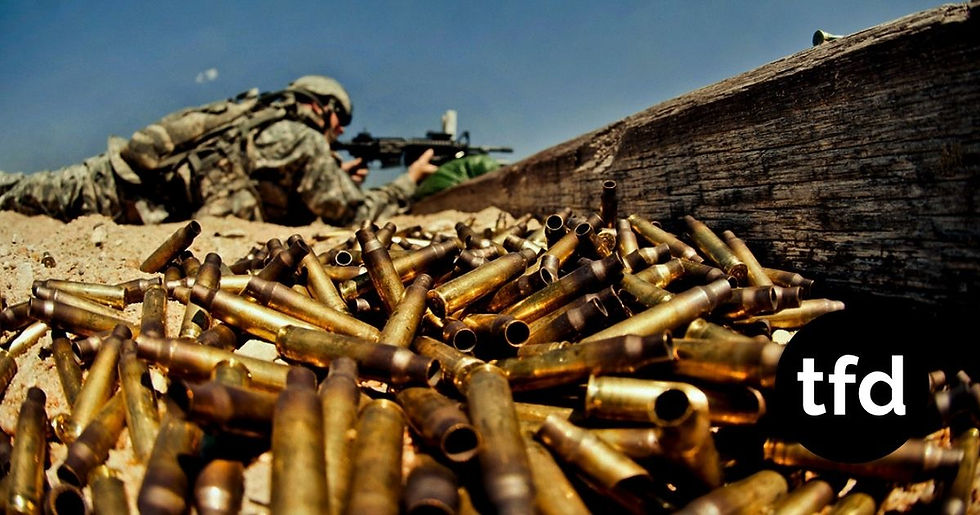


According to the Center for Strategic and International Studies (CSIS), the U.S. has used significant portions of its advanced weapons stockpiles, including large shares of Precision Strike Missiles, THAAD interceptors, Patriot systems, Tomahawk cruise missiles, and long-range JASSMs.
Separately, U.S. support for Ukraine since 2022 has also drawn heavily on inventories, including Javelin and Stinger systems and artillery ammunition.

Replenishing these stockpiles presents challenges. Some advanced weapons rely on rare earth elements such as samarium, yttrium, dysprosium, and terbium—materials for which China dominates global supply chains.
Export controls imposed by Beijing could complicate efforts to rebuild inventories.
Analysts warn that supply chain dependencies may pose long-term strategic risks for U.S. defense readiness.


