%20(3).png)


![TFD [LOGO] (10).png](https://static.wixstatic.com/media/bea252_c1775b2fb69c4411abe5f0d27e15b130~mv2.png/v1/crop/x_150,y_143,w_1221,h_1193/fill/w_179,h_176,al_c,q_85,usm_0.66_1.00_0.01,enc_avif,quality_auto/TFD%20%5BLOGO%5D%20(10).png)
Argentinians Cope With Runaway Inflation By Stockpiling
- By The Financial District

- Jan 31, 2022
- 2 min read
Inflation transforms the way people spend, save and think. That’s true now for some in the United States, where prices rose last year by 7 percent, the fastest rate in nearly 40 years.
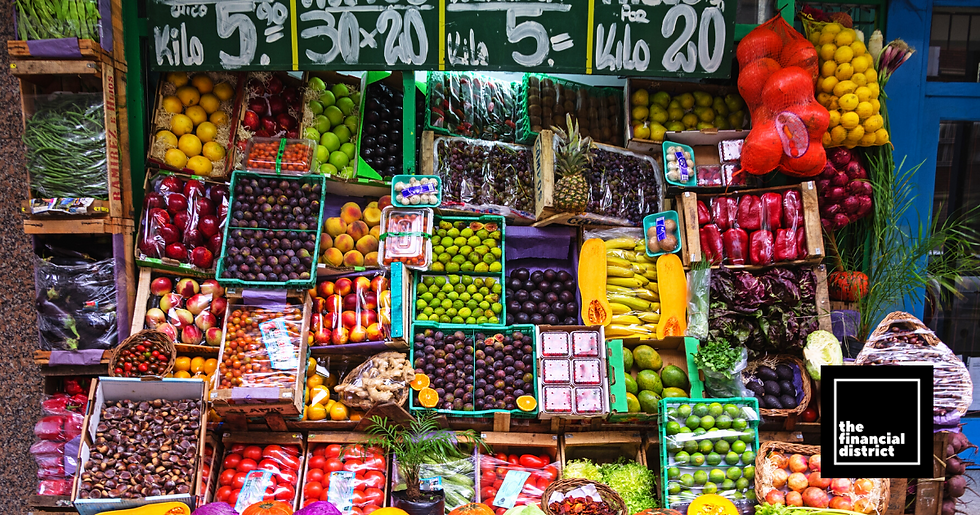
Photo Insert: A fruit stand in Buenos Aires, Argentina


But it’s been the reality in Argentina for decades, where inflation last year topped 50 percent — and is expected to be similarly high in 2022, David Feliba reported for the Washington Post.
The long, stubborn march of rising prices in this South American nation has inspired a range of strategies to limit the damage. Buy enough toothpaste for the entire year? Store as many cans as the cupboard will allow?

Keep the freezer crammed with meat? Buying staples in bulk here can feel like saving money. Or better than saving money, because saving money means it just sits there while its value falls.
Agustina Caparulo says filling her gas tank “almost feels like investing,” because the next time she visits the pump the price will almost certainly be higher.

Analysts here say inflation also inflicts a psychological toll: A sense of becoming uncertain about what goods and services are worth — and a fear of overspending as a result. One major tactic here is stockpiling.
“To the extent that I can, I try to stash as many goods as possible,” said Ana Vienny, a 63-year-old retiree. At one point, she says, she owned 48 cans of tuna and enough vinegar bottles to cook for months.

“Eventually, I had to stop buying because there was simply no more space.” Taking out loans can also be helpful, provided the interest rate is lower than expected inflation.
Then there’s paying in installments. In Argentina, installments are applied to just about everything. Sergio González, a financial analyst, bought a single jar of peanut butter last month for 300 pesos — less than $3. He arranged to pay in installments, interest-free, over the next 12 months. It will work out to a quarter a month.

“Just about anything that you get interest-free, you grab it without hesitation,” he said.
“The idea is that you take advantage of inflation as it will dilute future fixed payments.” A great challenge is matching income to rising prices. Some workers here renegotiate salaries quarterly — and any increase below the inflation rate is effectively a pay cut.


