%20(3).png)


![TFD [LOGO] (10).png](https://static.wixstatic.com/media/bea252_c1775b2fb69c4411abe5f0d27e15b130~mv2.png/v1/crop/x_150,y_143,w_1221,h_1193/fill/w_179,h_176,al_c,q_85,usm_0.66_1.00_0.01,enc_avif,quality_auto/TFD%20%5BLOGO%5D%20(10).png)
China Economy Is Going Backwards, CNN Business Warns
- By The Financial District

- May 8, 2022
- 2 min read
China's gigantic services sector just contracted at the second sharpest pace on record as COVID lockdowns hit businesses hard.
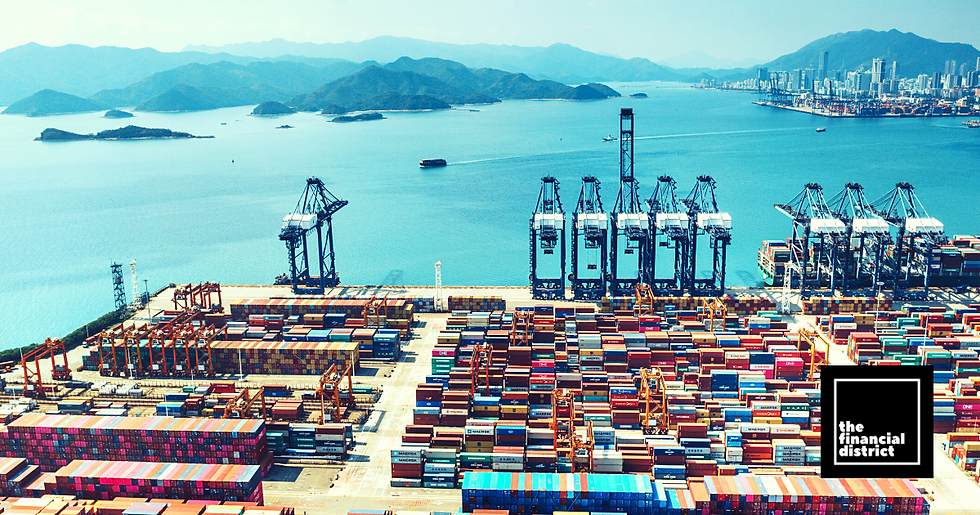
Photo Insert: The nearly 6-point decline in services activity in April was second only to the collapse in February 2020.


The Caixin purchasing managers' index, a closely-watched indicator for assessing the state of the economy, plummeted to 36.2 in April from 42 in March, according to a survey released by IHS Markit on Thursday, May 5, 2022, Laura He reported for CNN Business.
A reading below 50 indicates contraction, while anything above that gauge shows expansion. The services sector accounts for more than half of the nation's GDP and over 40% of its employment. And with survey data showing China's manufacturing sector also shrinking last month, the world's second biggest economy went backward in April.

While conditions might improve this month as COVID infection rates ease and officials try to limit the damage to the economy, large parts of Beijing have just been placed under tighter restrictions and some economists are now forecasting that Chinese GDP will decline in the second quarter.
The nation's capital has shut down its largest district, Chaoyang, suspending transportation within it and encouraging 3.5 million residents to work from home as part of its latest effort to curb COVID-19 cases.

The nearly 6-point decline in services activity in April was second only to the collapse in February 2020, when China's economy came to a near standstill as it battled to contain the initial coronavirus outbreak that started from Wuhan. In that month, the Caixin services PMI skidded to 26.5 from 51.8 in January.
Businesses in the world's second largest economy were already grappling with rising energy and raw material costs, when COVID lockdowns hamstrung their operations further.

It has also become harder for firms to pass the higher prices to consumers, because of the impact COVID restrictions have had on customer demand. That has translated to even lower employment.
“Some companies, affected by the drop in orders, laid-off workers to lower costs,” said Wang Zhe, senior economist for Caixin Insight Group. The measure for employment in the services sector has been under 50 for four consecutive months, the survey showed.


