%20(3).png)


![TFD [LOGO] (10).png](https://static.wixstatic.com/media/bea252_c1775b2fb69c4411abe5f0d27e15b130~mv2.png/v1/crop/x_150,y_143,w_1221,h_1193/fill/w_179,h_176,al_c,q_85,usm_0.66_1.00_0.01,enc_avif,quality_auto/TFD%20%5BLOGO%5D%20(10).png)
CHINESE ARCHAEOLOGISTS AGOG OVER ‘DRAGON MAN’ DISCOVERY IN HARBIN
- By The Financial District

- Jun 26, 2021
- 1 min read
Chinese researchers have unveiled an ancient skull that could belong to a completely new species of human. The team has claimed it is our closest evolutionary relative among known species of ancient human, such as Neanderthals and Homo erectus.
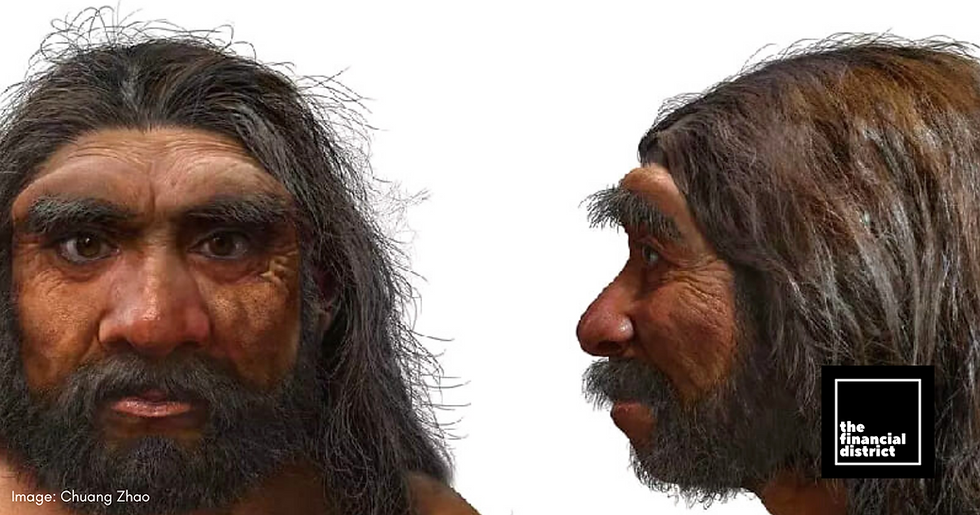

Nicknamed "Dragon Man", the specimen represents a human group that lived in East Asia at least 146,000 years ago. It was found at Harbin, northeast China, in 1933, but only came to the attention of scientists more recently, Pallab Ghosh reported for BBC News. An analysis of the skull has been published in the journal The Innovation.
One of the UK's leading experts in human evolution, Prof. Chris Stringer from London's Natural History Museum, was a member of the research team. "In terms of fossils in the last million years, this is one of the most important yet discovered," he told BBC News.

"What you have here is a separate branch of humanity that is not on its way to becoming Homo sapiens (our species), but represents a long-separate lineage which evolved in the region for several hundred thousand years and eventually went extinct."
The researchers say the discovery has the potential to rewrite the story of human evolution. Their analysis suggests that it is more closely related to Homo sapiens than it is to Neanderthals.
They have assigned the specimen to a new species: Homo longi, from the Chinese word "long", meaning dragon. "We found our long-lost sister lineage," said Xijun Ni, a professor at the Chinese Academy of Sciences and Hebei GEO University in Shijiazhuang.