%20(3).png)


![TFD [LOGO] (10).png](https://static.wixstatic.com/media/bea252_c1775b2fb69c4411abe5f0d27e15b130~mv2.png/v1/crop/x_150,y_143,w_1221,h_1193/fill/w_179,h_176,al_c,q_85,usm_0.66_1.00_0.01,enc_avif,quality_auto/TFD%20%5BLOGO%5D%20(10).png)
Indon President Regrets U.S.-Instigated Bloodbath That Killed 1-M
- By The Financial District

- Jan 17, 2023
- 2 min read
President Joko Widodo expressed deep regret over gross human rights violations during Indonesia’s tumultuous post-colonial past, going back to the mass killing of communists and suspected sympathizers in the mid-1960s committed by the military and religious fundamentalists.
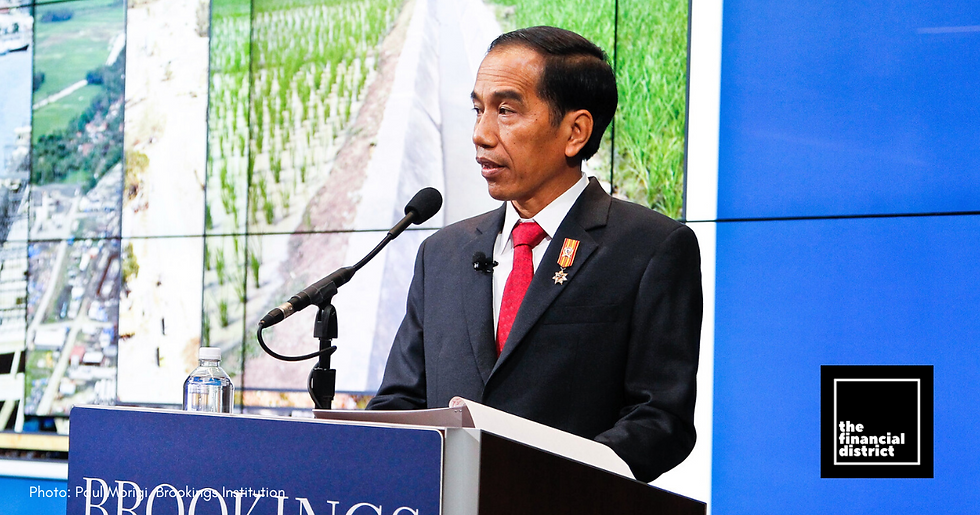
Photo Insert: At least half a million people died, according to some historians and activists, in violence that began in late 1965 when the military launched a purge of communists who they said were planning a coup, which was proven to be false.


At least half a million people died, according to some historians and activists, in violence that began in late 1965 when the military launched a purge of communists who they said were planning a coup, which was proven to be false.
It turned out that the so-called Berkeley Mafia of American academics was behind the bloodbath, which aimed to eliminate the Partai Kommunis Indonesia (PKI) as it was deemed to have a strong influence on President Sukarno.

A million or more people were jailed, suspected of being communists, during the crackdown, and in 1967, Gen. Suharto ousted President Sukarno, Indonesia’s independence leader, and went on to rule the world’s biggest Muslim-majority country for three decades.
Widodo, popularly known as Jokowi, recently received the report from a team he had commissioned last year to investigate Indonesia’s bloody history, having promised to take up the issue when he first came to power in 2014.

He cited 11 other rights incidents, spanning a period between 1965 and 2003, including the killing and abduction of students blamed on security forces during protests against Suharto’s autocratic rule in the late 1990s.
Around 1,200 people were killed during rioting in Jakarta in 1998 which often targeted the Chinese community.

Winarso, a coordinator of a group that cares for survivors of the 1965 bloodshed, said that while the president’s acknowledgment was insufficient it could open up room for discussion about the massacres.
Usman Hamid of Amnesty International said victims should receive reparations and serious crimes of the past need to be resolved “through judicial means.”

“For me…what’s important is that the president gives assurances that gross rights violations don’t happen in the future by trying the suspected perpetrators in court,” said retired civil servant Maria Catarina Sumarsih, whose son Wawan was shot dead in 1998 while helping a wounded student.


