%20(3).png)


![TFD [LOGO] (10).png](https://static.wixstatic.com/media/bea252_c1775b2fb69c4411abe5f0d27e15b130~mv2.png/v1/crop/x_150,y_143,w_1221,h_1193/fill/w_179,h_176,al_c,q_85,usm_0.66_1.00_0.01,enc_avif,quality_auto/TFD%20%5BLOGO%5D%20(10).png)
THE ECONOMIST PLEADS: DON’T ABANDON GLOBALIZATION
- By The Financial District

- Apr 3, 2021
- 2 min read
The Economist, which champions the interest of London’s capital market, has warned nations not to abandon globalization, the supposed free trade, open market, and the efficiency of the global production and supply chains, and used the Ever Given mishap at the Suez Canal as a metaphor.
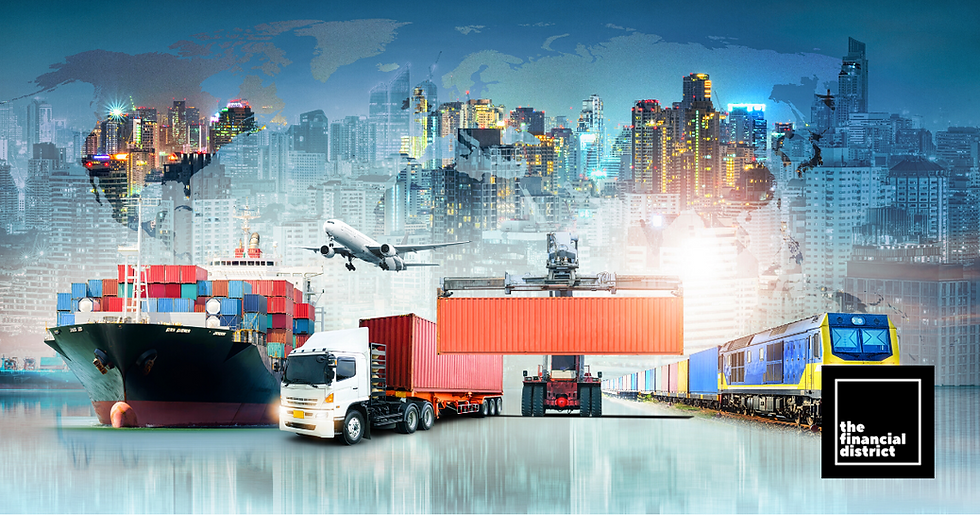

In its April 3, 2021 essay in the Leaders section entitled “Message in a Bottleneck,” The Economist argued that Xi Jinping’s “dual circulation” economy, the US shift to strengthening domestic manufacturing and breaking dependence on Chinese products, as well as the move of the European Union (EU) move to fortify its own drug manufacturing system are a dangerous lurch to autarky, which its sees as India’s formula to achieve self-reliance.

“The call for self-reliance also misconstrues the balance between the costs of interdependence, which are brief and visible, and its benefits, which trickle in month after month unheralded. The lost efficiencies and expense of duplicating shared production chains would be ruinous: Firms have $36 trillion invested abroad. The build-up of costs, as domestic firms were protected from competition by subsidies or tariffs, would be a hidden tax on consumers. And after all that, a policy of self-reliance would end up penalizing countries too small or poor to host advanced industries. If manufacturing ends up concentrated at home, even big economies would be exposed to local shocks, lobbying and the shortcomings of their own producers, as America may discover with Intel,” the essay argued.

“Resilience comes not from autarky but from diverse sources of supply and constant private-sector adaptation to shocks. Over time, global firms will adjust to even long-term threats, including tension between America and China and the effects of climate change, by gradually altering where they make fresh investments. This is a perilous moment for trade. Just as globalization begets openness, so protection and subsidies in one country spread to the next. Globalization is the work of decades. Do not let it run aground,” The Economist insisted.
Yet, globalization has led to the United Kingdom’s manufacturing share of the gross national product (GNP) skidding to 1%, and its 40% share in the EU market may just as well disappear, while the loan sharks and financial behemoths accumulate money while the economy suffers. It has profited the 1% but threw the 99% under the bus.


