%20(3).png)


![TFD [LOGO] (10).png](https://static.wixstatic.com/media/bea252_c1775b2fb69c4411abe5f0d27e15b130~mv2.png/v1/crop/x_150,y_143,w_1221,h_1193/fill/w_179,h_176,al_c,q_85,usm_0.66_1.00_0.01,enc_avif,quality_auto/TFD%20%5BLOGO%5D%20(10).png)
Wealthy Singapore To Subsidize Citizens Zapped By Inflation
- By The Financial District

- Feb 17, 2023
- 2 min read
Singapore will increase subsidies to households by S$3 billion (US$2.26 billion) to help offset rising living costs and a higher sales tax, the government announced, Tsubasa Suruga and Dylan Loh reported for Nikkei.
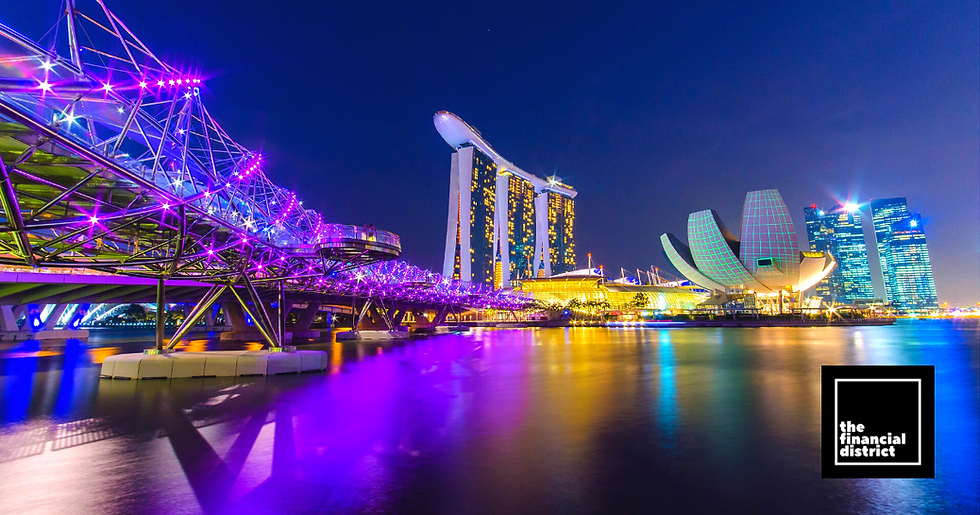
Photo Insert: Singapore earns its keep from trading and financial services but is highly dependent on foreign labor, which earns less than the minimum pay of Singaporeans.


The budget for the fiscal year 2023, unveiled by leader-in-waiting and Deputy Prime Minister Lawrence Wong, shows how the city-state plans to navigate an uncertain post-pandemic year amid elevated inflation and slower global growth.
At the same time, the government continues to emphasize building sustainable finances even as its wealth funds have been battered black and blue since 2008, when one of its wealth funds, Temasek Holdings, lost at least $4 billion from its stake at the bankrupted Merrill-Lynch, and another $275 million from FTX cryptocurrency assets last year.

Ho Ching, wife of current Prime Minister Lee Hsien-Loong, managed the fund for 18 years before quitting last year.
Singapore’s principal wealth fund is GIC Private Ltd. (GIC), which manages the city-state’s foreign reserves. Established in 1981, it seeks to preserve and enhance the international purchasing power of the reserves with the aim of achieving good long-term returns above global inflation.

It invests internationally in developed market equities, emerging market equities, nominal bonds and cash, inflation-linked bonds, private equity and real estate.
The Sovereign Wealth Fund Institute (SWFI) had estimated the fund's assets at US$690 billion as of June 2022 even as Forbes pegged its assets at US$744 billion after legislation were passed to transfer about US$137 billion from the central bank.

Temasek Holdings manages about US$630 billion of assets under management (AUM) and the national pension plan Central Provident Fund (CPF) with assets of US$397 billion (S$540 billion), giving a total AUM of US$1.64 trillion.
The resource-poor country imports more than 70% of its food from Malaysia and Indonesia, 100% of its water from Malaysia, and 100% of its oil and gas from the Middle East, Russia, the US, the UK, and Norway.
Singapore earns its keep from trading and financial services but is highly dependent on foreign labor, which earns less than the minimum pay of Singaporeans.