%20(3).png)


![TFD [LOGO] (10).png](https://static.wixstatic.com/media/bea252_c1775b2fb69c4411abe5f0d27e15b130~mv2.png/v1/crop/x_150,y_143,w_1221,h_1193/fill/w_179,h_176,al_c,q_85,usm_0.66_1.00_0.01,enc_avif,quality_auto/TFD%20%5BLOGO%5D%20(10).png)
"Hot Money" Flows Turn Positive In June
- By The Financial District

- Aug 9, 2023
- 2 min read
Foreign portfolio investments registered a net inflow in June, ending four straight months of outflows, the Bangko Sentral ng Pilipinas (BSP) said.
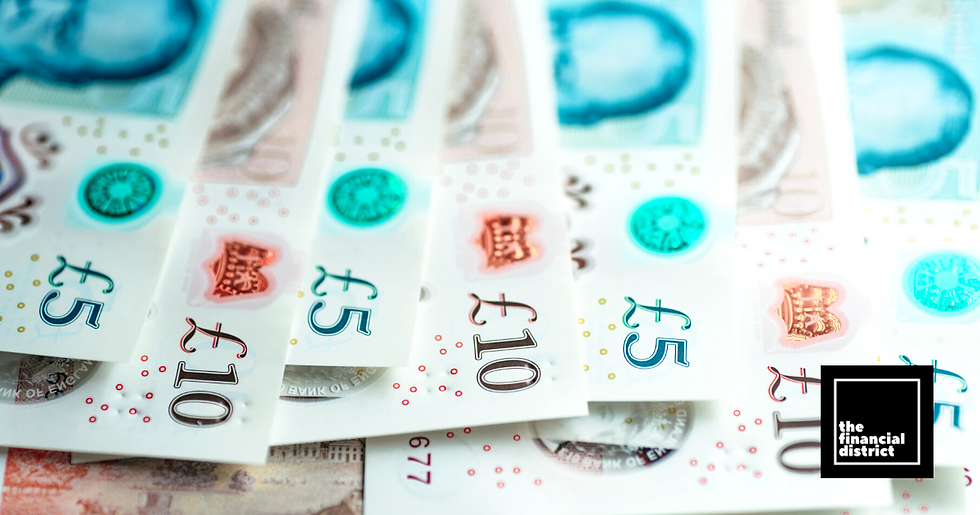
Photo Insert: The top five investor economies were the United Kingdom, the United States, Luxembourg, Singapore, and Switzerland, accounting for 84.2% of total foreign portfolio investment inflows.


Transactions on short-term foreign investments registered with the BSP through authorized agent banks (AABs) posted a net inflow of $1.23 million in June, a turnaround from the $124.49-million net outflow seen in May and the $342.19-million net outflow in the same month of 2022.
These foreign investments are also known as “hot money” — called as such due to the ease by which these funds enter and exit an economy.

BSP data showed gross inflows of hot money fell by 14.3% to $889.44 million in June, from $1.04 billion a year earlier. The top five investor economies were the United Kingdom, the United States, Luxembourg, Singapore, and Switzerland, accounting for 84.2% of total foreign portfolio investment inflows.
Most of the investments went into Philippine Stock Exchange-listed securities of companies involved in property, banks, holding firms, food, beverage, and tobacco, as well as telecommunications. The rest were invested in peso government securities.

Gross outflows declined by 35.6% to $888.21 million in June from $1.38 billion a year ago. The BSP said the United States received $589 million or 66.3% of total outward remittances.
Security Bank Corp. chief economist, Robert Dan J. Roces, said the steady interest rate differential between the Philippines and the United States boosted investor sentiment.

“As the Fed and BSP both paused, the interest rate differential between the Philippines and the US remained above 1.0%. This made Philippine assets more attractive to investors, who then bought pesos and invested in the Philippines,” Roces said in a written message.
At its June meeting, the Monetary Board decided to extend the pause for a second time, keeping the key interest rate at 6.25%. This was after it hiked borrowing costs by a total of 425 basis points (bps) from May 2022 to March 2023.

The Federal Open Market Committee likewise kept policy rates on hold at its meeting in June, following the cumulative 500-bp rate hike since March 2022. Rizal Commercial Banking Corp. Chief Economist Michael L. Ricafort said hot money inflows in June may have been driven by the easing inflation trend in the Philippines and in the US.
In the Philippines, headline inflation slowed to 5.4% in June from 6.1% a month earlier. This was the slowest print in 14 months. Year-to-date inflation settled at 7.2%, still higher than the 5.4% forecast of the BSP.

Meanwhile, US inflation slowed to 3% year on year from 4% in May. This was the smallest annual increase since March 2021. A bipartisan deal to raise the debt ceiling in the United States also supported investor sentiment, Ricafort said.
US President Joseph R. Biden, Jr. signed a deal that narrowly averted a crisis that would have sent the US into a debt default.


