%20(3).png)


![TFD [LOGO] (10).png](https://static.wixstatic.com/media/bea252_c1775b2fb69c4411abe5f0d27e15b130~mv2.png/v1/crop/x_150,y_143,w_1221,h_1193/fill/w_179,h_176,al_c,q_85,usm_0.66_1.00_0.01,enc_avif,quality_auto/TFD%20%5BLOGO%5D%20(10).png)
Is Xi Jinping To Be Blamed For China's Economic Slump?
- By The Financial District

- Sep 26, 2023
- 1 min read
China's economy, which had experienced the longest-running boom in history, is facing a significant slowdown, according to This Week magazine's report.
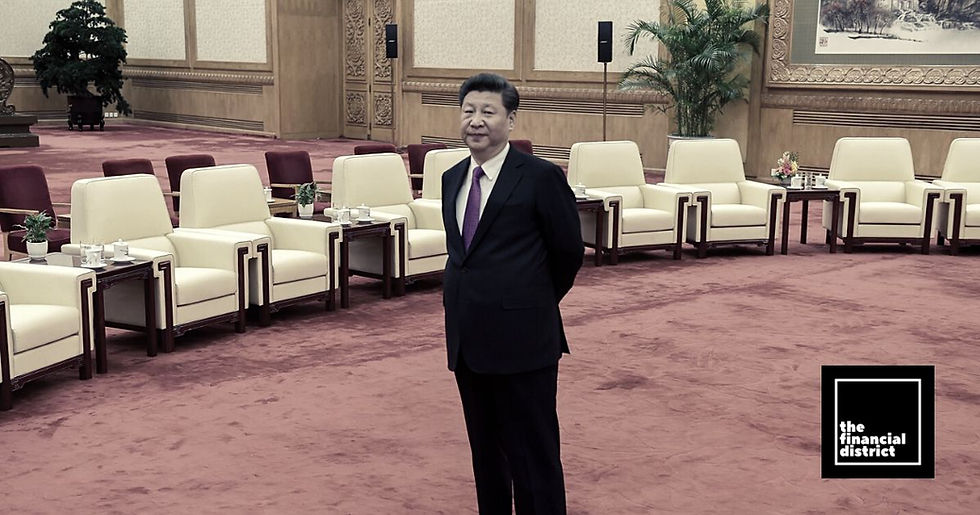
One contributing factor to this economic situation is attributed to Xi Jinping's three-year "zero-COVID" policy, which was abandoned in January. I Photo: U.S. Department of State


Since the late 1970s when the ruling Communist Party embraced Western-style trade, investment, and market forces, China has consistently doubled the size of its economy every decade, lifting around 800 million Chinese out of poverty and transforming from a predominantly rural nation into a manufacturing powerhouse and a key competitor to the United States.

However, China's economy is now decelerating rapidly, with a GDP growth rate of only 3% last year, compared to 7.4% a decade earlier. This economic slowdown has had a particularly harsh impact on young people.
Exports have declined, consumer spending is down, private investment has dropped by a quarter since 2020, and concerns about a deflationary spiral are on the rise.

China's debt now stands at nearly four times its GDP, and a burst housing bubble has left millions of apartments unoccupied, threatening the savings of many Chinese who had invested in real estate.
One contributing factor to this economic situation is attributed to Xi Jinping's three-year "zero-COVID" policy, which was abandoned in January.

Prolonged lockdowns in cities like Shanghai have disrupted production, led to mass layoffs, and unnerved foreign buyers who depended on Chinese manufacturers to maintain their supply chains.


