%20(3).png)


![TFD [LOGO] (10).png](https://static.wixstatic.com/media/bea252_c1775b2fb69c4411abe5f0d27e15b130~mv2.png/v1/crop/x_150,y_143,w_1221,h_1193/fill/w_179,h_176,al_c,q_85,usm_0.66_1.00_0.01,enc_avif,quality_auto/TFD%20%5BLOGO%5D%20(10).png)
Japan Manufacturer Sentiment Worsens For 2nd Straight Quarter
- By The Financial District

- Jul 2, 2022
- 2 min read
According to the Bank of Japan, major Japanese manufacturers' business confidence declined for the second consecutive quarter in June as a result of rising energy and raw material costs in the wake of Russia's invasion of Ukraine and supply shortages brought on by Chinese supply restrictions.
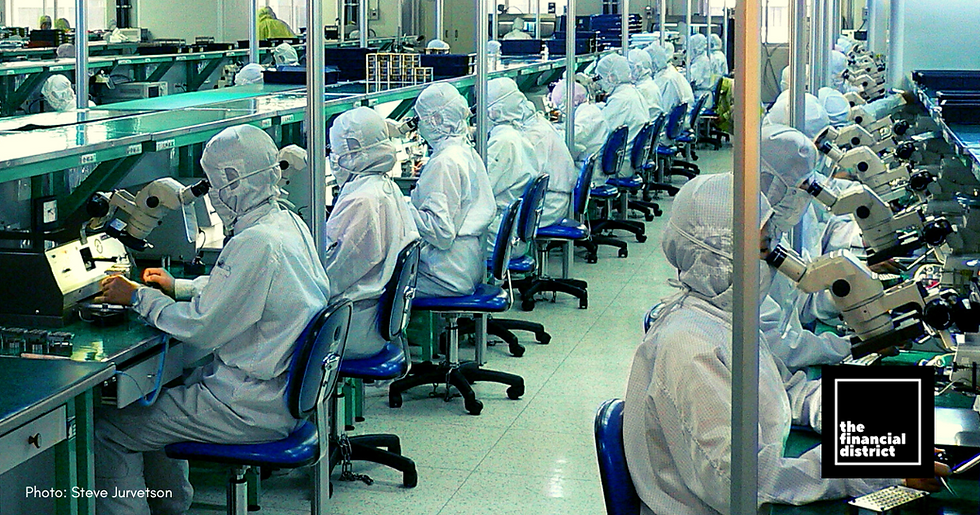
Photo Insert: The main indicator used to gauge company sentiment, which includes automakers and electronics manufacturers, decreased from 14 three months ago to 9 today.


The main indicator used to gauge company sentiment, which includes automakers and electronics manufacturers, decreased from 14 three months ago to 9 today. It fell short of the median market prediction of 13, according to a Kyodo News study.
The major non-manufacturers index, which includes the service sector, increased from 9 to 13 in the previous survey, marking the first rise since the data from December 2021 and signaling a rebound from the effects of the coronavirus pandemic.

Affected by increasing material prices and lockdowns in China because of the COVID-19 pandemic, major manufacturers' confidence in the car industry fell further to minus 19 from minus 15 in March, while that in the production machinery category fell to 34 from 43.
According to Shunsuke Kobayashi, chief economist of Mizuho Securities Co., "The impact of the lockdowns was felt in a wide range of sectors, including textiles, lumber and wood products, iron and steel and production machinery."

Although the auto industry's decline was less muted after falling precipitously the previous quarter, the reduction in auto manufacturing has hurt industries that had intended to procure parts for automakers.
Due to the difficulty in obtaining components like semiconductors, automakers including Toyota Motor Corp. have been compelled to reduce output.

Along with a strong rise in geopolitical threats and supply worries, the war Russia is waging in Ukraine and the yen's precipitous declines versus other major currencies like the U.S. dollar and the euro have caused a steep increase in the price of crude oil and other commodities.
Surveyed businesses anticipated that the country's consumer price index would rise by an average of 2.4 percent a year later, up from the 1.8 percent increase forecast three months before.

According to the study, the mood among manufacturers declined in half of the 12 non-manufacturing sectors in the most recent quarter while it increased in 12 out of the 16 manufacturing sectors.
The sentiment among big manufacturers is predicted to increase slightly over the next three months to 10, while the sentiment among major non-manufacturers is predicted to remain the same at 13.

As Japan lifted anti-virus curbs and gradually loosened entry restrictions on foreign visitors, sentiment among non-manufacturers' services for people covering travel and entertainment increased to 18 from minus 14, and that for accommodations, eating, and drinking services improved to minus 31 from minus 56.


