%20(3).png)


![TFD [LOGO] (10).png](https://static.wixstatic.com/media/bea252_c1775b2fb69c4411abe5f0d27e15b130~mv2.png/v1/crop/x_150,y_143,w_1221,h_1193/fill/w_179,h_176,al_c,q_85,usm_0.66_1.00_0.01,enc_avif,quality_auto/TFD%20%5BLOGO%5D%20(10).png)
U.S. Chip Ban To Hurt SoKor Foundries In China, TSMC
- By The Financial District

- Oct 11, 2022
- 2 min read
The US government's recent decision to impose new restrictions on the sale of semiconductors and chipmaking equipment to China could hurt the Chinese foundries of South Korean chipmakers and the sales of Taiwan Semiconductor Manufacturing Corp. (TSMC), the information advisory firm Trendforce Corp. has concluded, Pan Chi-yi and Evelyn Kao reported for the Central News Agency (CNA).
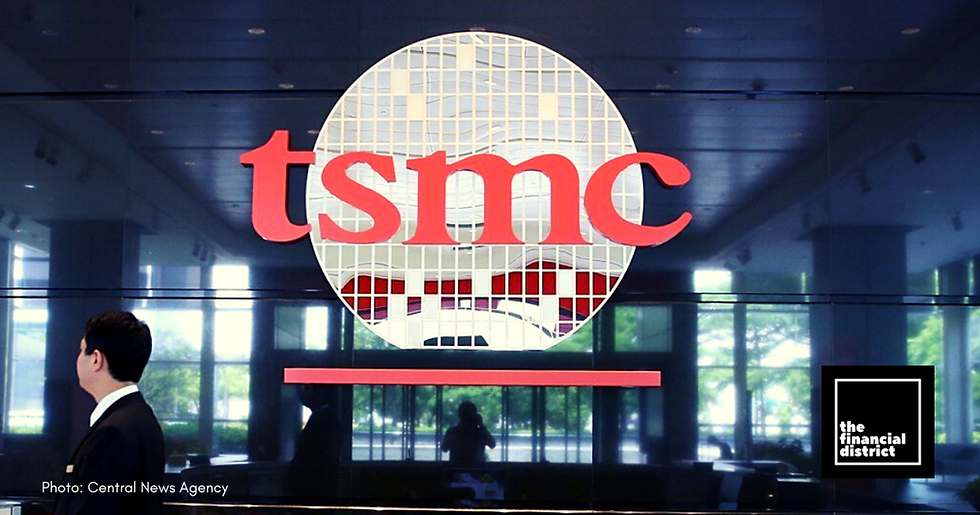
Photo Insert: The sales of TSMC's advanced chips from its Taiwan fabs to Chinese clients could also be curtailed.


The measures announced by the US on Friday included the requirement that advanced computing chips, including those used in artificial intelligence (AI) and high-performance computing (HPC) and production equipment cannot be sold to China without a license.
In practice, that means prohibiting the shipment of semiconductor manufacturing equipment and advanced chips to Chinese companies, but sales to foreign companies operating in China will still be reviewed on a case-by-case basis.

H.P. Chang, COO of TrendForce's Center for Research Operations, told CNA that the measures extend the restrictions from standard semiconductors to memory chips, which could hurt Chinese and South Korean suppliers.
The companies making chips in China that could be most affected are Chinese chipmakers Yangtze Memory Technology Corp. (YMTC) and ChangXin Memory Technologies and Korean chipmakers SK Hynix and Samsung, Chang said.

At the same time, because the restrictions cover chip sales by companies using American technologies, including TSMC, the sales of TSMC's advanced chips from its Taiwan fabs to Chinese clients could also be curtailed, Trendforce said.
TSMC's fabs in China and most of China's home-grown chipmakers use more mature 28-nanometer processes or above, which means many of the advanced chips that will fall under the restrictions will come from outside China.

Trendforce said chips used in high-performance computing by both Chinese and American IC design houses are mostly made by TSMC using its mainstream 7nm and 5nm processes and the curbs could reduce the orders received by TSMC for those chips.


