%20(3).png)


![TFD [LOGO] (10).png](https://static.wixstatic.com/media/bea252_c1775b2fb69c4411abe5f0d27e15b130~mv2.png/v1/crop/x_150,y_143,w_1221,h_1193/fill/w_179,h_176,al_c,q_85,usm_0.66_1.00_0.01,enc_avif,quality_auto/TFD%20%5BLOGO%5D%20(10).png)
U.S. Mulls Ban On China's Exports Of Illegally Caught Fish
- By The Financial District

- Jun 30, 2022
- 2 min read
The Biden administration is stepping up efforts to prevent Chinese illegal fishing, directing federal agencies to better collaborate with one another and with foreign partners in order to promote sustainable exploitation of the world's seas.
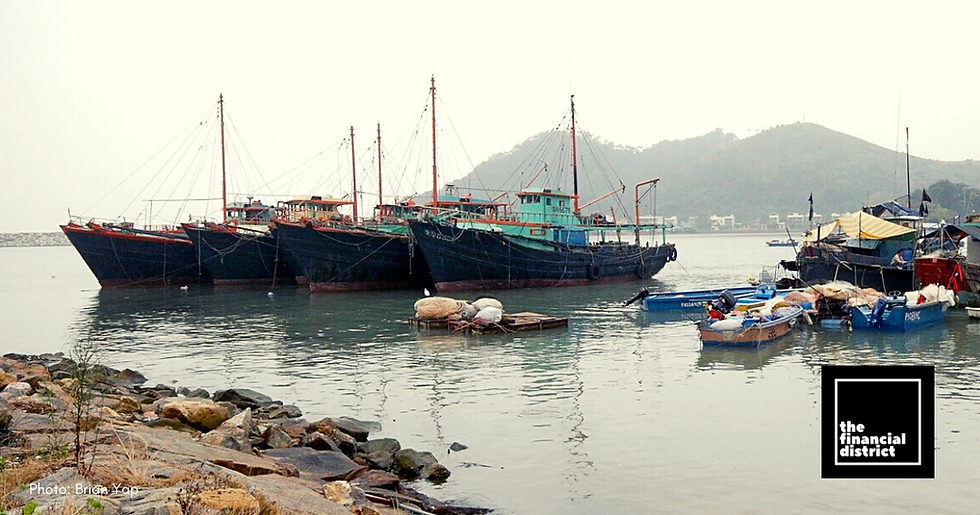
Photo Insert: While China is a leading seafood processor globally, its fishing fleet has become notorious for encroaching on and illegally fishing in foreign territories.


The White House released its first-ever National Security memo on illegal, unreported, and unregulated fishing (IUU) on Monday (Tuesday, June 28, 2022, in Manila), to coincide with the start of a United Nations Ocean Conference in Lisbon, Portugal, according to Barry Hatton and Joshua Goodman for the Associated Press (AP).
According to the US International Trade Commission (ITC), a federal agency, illicit, unreported, and unregulated fishing accounted for about 11% of total US seafood imports worth $2.4 billion in 2019.

While China is not named in the lengthy policy framework, the language used in it leaves no mistake as to where it is directed. The message is sure to annoy Beijing at a time when the two countries' geopolitical rivalry is heating up.
China is a leading seafood processor, having established the world's largest remote water fishing fleet through state loans and fuel subsidies, with thousands of floating fish factories scattered across Asia, Africa, and the Americas.

The letter specifically encourages 21 federal departments and agencies to improve intelligence sharing, coordinate enforcement actions including penalties and visa restrictions, and promote best practices among international allies.
It will be followed in the following days by new National Oceanic and Atmospheric Administration rules broadening the definition of illicit fishing to include associated labor violations, a preliminary step toward eventually blacklisting flag states that fail to comply.

Conservation groups praised the effort, which builds on work started under the Obama administration to clean up US seafood supply chains. “American fishermen have to follow a lot of rules and regulations by the U.S. government,” said Beth Lowell, vice president for Oceana, a Washington-based non-profit.
“By taking actions against other countries like China that have a poor labor and environmental record, it levels the playing field and that benefits legal fishermen all over the world.”

The action plan also calls for the expansion of the United States' seafood import monitoring program, which requires importers to produce documentation from the site of capture to ensure that illegally captured fish do not enter the country. Currently, the program only includes a few dozen species. Oceana, for example, has advocated for the program to cover all imports.


